The Engine Shows the Move. But Why Does It Work?
How a conversation after a chess tournament led to AI explanations in Blunderzone.
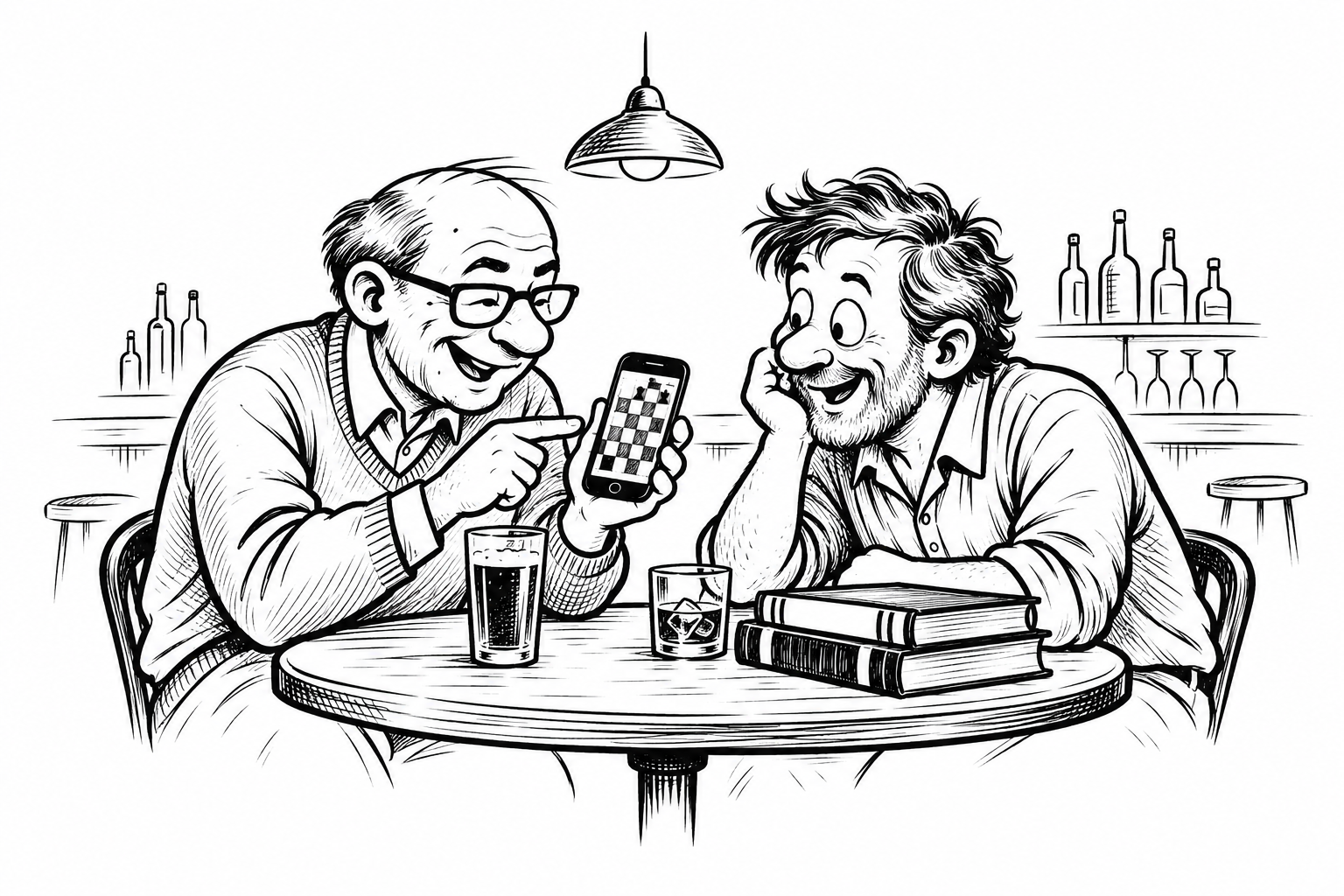
The idea started with an old friend, a chess tournament, and an evening in a bar.
I had met a friend from my student days at the tournament. Later that evening, he showed me some of the latest chess books he was publishing, and I showed him Blunderzone.
His reaction was simple: “It would be nice if it could explain why I played a bad move.”
That seemed like an obvious thing to want. My first thought, though, was that I probably couldn’t make it work.
A good move is not an explanation
I remembered reading about attempts to explain chess moves in natural language, including work by major chess platforms. What I had read left me sceptical about how well it could be done.
It is easy to imagine the feature: you make a mistake, press a button, and receive a clear explanation. Making that explanation useful is a different problem.
An engine can show you a better move and a continuation. Sometimes that is enough. You follow the line, see the lost piece or the mating threat, and understand immediately.
Other positions are less obvious. The better move might improve a piece, prevent an opponent’s plan, or avoid a weakness that only becomes important later. You can look at the engine’s recommendation and still wonder what you were supposed to notice.
That was the gap my friend had pointed out.
Trying it anyway
Despite my doubts, I decided to experiment.
It took a combination of technologies and a lot of attempts to get explanations that made sense. This was not something I could solve simply by adding a chat box and asking an AI to comment on a position.
The difficult part was connecting the explanation to the actual chess problem. Fluent language alone was not enough. The explanation needed to help the player understand what was wrong with the move and what made the alternative better.
That became the standard I was working towards: after reading an explanation, would I understand something useful about the position?
From remembering a move to understanding an idea
This fits naturally with the reason I built Blunderzone in the first place.
When you train on mistakes from your own games, you return to positions you have already struggled with. Repetition gives you another chance to find the better move. An explanation adds something else: a chance to understand the idea behind it.
Consider a move that allows your opponent to create a threat. Remembering the correct answer may help you solve that exact puzzle next time. Understanding why you needed to prevent the threat may help you recognise a similar situation in another game.
That is what I want the explanations to support.
Sometimes the useful lesson is tactical: a defender was overloaded, a piece was left unprotected, or a forcing move was overlooked. Sometimes it is positional: a piece needed a better square, or a pawn move created a weakness.
These are examples of the kinds of ideas an explanation should make easier to see. The goal is to connect a concrete move to something the player can recognise again.
An explanation you can question
I do not want to present AI explanations as infallible. They can be incomplete or wrong, and a confident sentence is not proof that a chess idea is correct.
The position and the concrete moves still matter. A useful explanation should help you examine them more clearly. If a claim does not seem right, it is worth checking the continuation and asking whether the idea actually holds up on the board.
For me, this is also part of learning: understanding an explanation well enough to question it.
One conversation, a new part of Blunderzone
My friend’s suggestion stayed with me because it described a familiar frustration so simply.
You review a game. You see where you went wrong. You see the move you should have played. But you still do not quite understand why.
Blunderzone already gave me a way to return to those mistakes and practise them. Adding AI explanations was an attempt to make those return visits more useful.
The feature began with a question over a drink after a tournament. It became another step towards the kind of chess training I wanted: practice that helps me remember the move and understand the reason behind it.